Svati: Difference between revisions
No edit summary |
No edit summary |
||
| (5 intermediate revisions by the same user not shown) | |||
| Line 1: | Line 1: | ||
{{DISPLAYTITLE:Svati}} |
{{DISPLAYTITLE:Svati (स्वाति)}} |
||
[[File: |
[[File:Svati nakshatras in Temple draw+lbl 4ase.jpg|thumb|Svati, the 15th nakshatra, ]] |
||
[[File:15 Svati stellarium.gif|thumb|the 15th Nakshatra, Svati, with the bright star Arcturus in the middle (WGSN 2025).]] |
[[File:15 Svati stellarium.gif|thumb|the 15th Nakshatra, Svati, with the bright star Arcturus in the middle (WGSN 2025).]] |
||
(Malayendu's) Svati, or Anila, is an Indian name, used by the Indian Vedic tradition. Most of these names are roughly 3000 years old. They pre-date Hinduism but were taken over by it. |
|||
(Malayendu's) Svati (स्वाति), or Anila, is an Indian name, used by the Indian Vedic tradition. Most of these names are roughly 3000 years old. They pre-date Hinduism but were taken over by it. |
|||
==Concordance, Etymology, History== |
==Concordance, Etymology, History== |
||
'''Name Variants''' |
|||
* Anila |
|||
* Svati |
|||
* Suati |
|||
* Su-Ati |
|||
* Malayendu's Svati |
|||
[[File:Tibet nakshatra 13.png|thumb|Tibetan depiction of the Svati Goddess.]] |
[[File:Tibet nakshatra 13.png|thumb|Tibetan depiction of the Svati Goddess.]] |
||
Svati |
Svati is the name of a goodness. |
||
The asterism as historically depicted in temples consists of three stars, among which the middle one is brighter than the others. The identification of the bright star with [[Arcturus]] (α Bootis) is certain because of its mentioning in astrolabes with coordinates. The other two stars, therefore, must be ζ and η Bootis. |
The asterism as historically depicted in temples consists of three stars, among which the middle one is brighter than the others. The identification of the bright star with [[Arcturus]] (α Bootis) is certain because of its mentioning in astrolabes with coordinates. The other two stars, therefore, must be ζ and η Bootis. |
||
===Origin of Constellation=== |
===Origin of Constellation=== |
||
====Stars within the Constellation Area==== |
|||
{| class="wikitable sortable mw-collapsible" |
|||
|+ |
|||
|- |
|||
!id |
|||
!Label |
|||
! IAU design. |
|||
!description |
|||
!Vmag |
|||
|- |
|||
|1 |
|||
|Arcturus |
|||
|HIP 69673 |
|||
| Constellation lines (Vertex) |
|||
| -0.05 |
|||
|- |
|||
|2 |
|||
|Muphrid |
|||
|HIP 67927 |
|||
| Constellation lines (Vertex) |
|||
|2.68 |
|||
|- |
|||
|3 |
|||
|ζ Boötis |
|||
|HIP 71795 |
|||
|Constellation lines |
|||
|3.78 |
|||
|- |
|||
|4 |
|||
| υ Boötis |
|||
|HIP 67459 |
|||
| Constellation lines (Vertex) |
|||
|4.07 |
|||
|- |
|||
|5 |
|||
|τ Boötis |
|||
|HIP 67275 |
|||
|Constellation lines (Vertex) |
|||
| 4.49 |
|||
|- |
|||
|6 |
|||
|* zet Boo B |
|||
|HIP 71795 |
|||
|Constellation lines |
|||
|4.51 |
|||
|- |
|||
|7 |
|||
|* zet Boo A |
|||
| HIP 71795 |
|||
|Constellation lines (Vertex) |
|||
|4.51 |
|||
|- |
|||
|8 |
|||
| - |
|||
| HIP 70027 |
|||
|Inside the hull |
|||
| 4.85 |
|||
|- |
|||
|9 |
|||
|7 Boo |
|||
|HIP 67787 |
|||
|Inside the hull |
|||
|5.709 |
|||
|- |
|||
|10 |
|||
|CY Boo |
|||
|HIP 69829 |
|||
| Inside the hull |
|||
|5.8 |
|||
|- |
|||
|11 |
|||
| V* CN Boo |
|||
|HR 5343 |
|||
|Inside the hull |
|||
| 5.957 |
|||
|- |
|||
|12 |
|||
| - |
|||
|HIP 68516 |
|||
|Inside the hull |
|||
|6.384 |
|||
|} |
|||
===Transfer and Transformation of the Constellation=== |
===Transfer and Transformation of the Constellation=== |
||
<gallery> |
|||
File:Svati nakshatras in Temple draw+lbl 4ase.jpg|Svati 10th century |
|||
File:Nakshatra temple magDraw lbl.jpg|Display of all 28th nakshatras in silver arch with candles in Tirupperunthurai (Athmanathaswamy temple) near Aranthangi, India, 10th century CE. (SMH 2025). |
|||
File:Nakshatras in Temple draw+lbl 4ase.jpg|Display of all 28th nakshatras in a door frame in Tirupperunthurai (Athmanathaswamy temple) near Aranthangi, India, 10th century CE. (SMH 2025). |
|||
File:Tibet nakshatra 13.png|Svati Tibetean |
|||
File:亢宿(仏像図彙).png|Svati Chinese |
|||
File:15 M-Svati draw.png|Svati as reconstructed by Jones (1720) |
|||
</gallery> |
|||
==Mythology== |
==Mythology== |
||
| Line 28: | Line 129: | ||
[[Category:Eurasia]] |
[[Category:Eurasia]] |
||
[[Category:South Asian]] |
[[Category:South Asian]] |
||
[[Category:Zodiac]] |
|||
Latest revision as of 17:19, 14 December 2025


(Malayendu's) Svati (स्वाति), or Anila, is an Indian name, used by the Indian Vedic tradition. Most of these names are roughly 3000 years old. They pre-date Hinduism but were taken over by it.
Concordance, Etymology, History
Name Variants
- Anila
- Svati
- Suati
- Su-Ati
- Malayendu's Svati

Svati is the name of a goodness.
The asterism as historically depicted in temples consists of three stars, among which the middle one is brighter than the others. The identification of the bright star with Arcturus (Ἀρκτοῦρος) (α Bootis) is certain because of its mentioning in astrolabes with coordinates. The other two stars, therefore, must be ζ and η Bootis.
Origin of Constellation
Stars within the Constellation Area
| id | Label | IAU design. | description | Vmag |
|---|---|---|---|---|
| 1 | Arcturus | HIP 69673 | Constellation lines (Vertex) | -0.05 |
| 2 | Muphrid | HIP 67927 | Constellation lines (Vertex) | 2.68 |
| 3 | ζ Boötis | HIP 71795 | Constellation lines | 3.78 |
| 4 | υ Boötis | HIP 67459 | Constellation lines (Vertex) | 4.07 |
| 5 | τ Boötis | HIP 67275 | Constellation lines (Vertex) | 4.49 |
| 6 | * zet Boo B | HIP 71795 | Constellation lines | 4.51 |
| 7 | * zet Boo A | HIP 71795 | Constellation lines (Vertex) | 4.51 |
| 8 | - | HIP 70027 | Inside the hull | 4.85 |
| 9 | 7 Boo | HIP 67787 | Inside the hull | 5.709 |
| 10 | CY Boo | HIP 69829 | Inside the hull | 5.8 |
| 11 | V* CN Boo | HR 5343 | Inside the hull | 5.957 |
| 12 | - | HIP 68516 | Inside the hull | 6.384 |
Transfer and Transformation of the Constellation

Svati 10th century
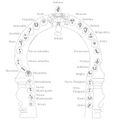
Display of all 28th nakshatras in silver arch with candles in Tirupperunthurai (Athmanathaswamy temple) near Aranthangi, India, 10th century CE. (SMH 2025).

Display of all 28th nakshatras in a door frame in Tirupperunthurai (Athmanathaswamy temple) near Aranthangi, India, 10th century CE. (SMH 2025).
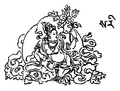
Svati Tibetean

Svati Chinese

Svati as reconstructed by Jones (1720)


Mythology
mnemonic tales and cultural significance
Weblinks
References
- References (general)